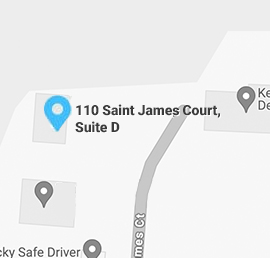
1717 Alliant Avenue, Suite 17, Louisville, Kentucky 40299   Telephone: (502)339-0222   julie@obryanlawoffices.com

O'Bryan Law Offices, Kentucky lawyers specializing in debtor bankruptcy, chapter 7, 11, 13, repossession, wage garnishment, liens, liquidation, foreclosure, and other bankruptcy matters
Bryan Law Offices, Kentucky lawyers specializing in debtor bankruptcy, chapter 7, 11, 13, repossession, wage garnishment, liens, liquidation, foreclosure, and other bankruptcy matters O'Bryan Law Offices, Kentucky lawyers specializing in debtor bankruptcy, chapter 7, 11, 13, repossession, wage garnishment, liens, liquidation, foreclosure, and other bankruptcy matters
O'Bryan Law Offices, Kentucky lawyers specializing in debtor bankruptcy, chapter 7, 11, 13, repossession, wage garnishment, liens, liquidation, foreclosure, and other bankruptcy matters
O'Bryan Law Offices, Kentucky attorneys specializing in debtor bankruptcy, chapter 7, 11, 13, repossession, wage garnishment, liens, liquidation, foreclosure, and other bankruptcy matters

Frequently Asked Questions


Should I file bankruptcy? What happens if I file a chapter 7 bankruptcy?

You commence a chapter 7 bankruptcy proceeding by filing a "petition" with the bankruptcy court. The person filing a Chapter 7 is referred to as the "debtor." The debtor is required to disclose to the court all his or her property and debts and turn over all nonexempt property if any to the bankruptcy trustee, who then converts it to cash for distribution to the creditors. The debtor then receives a discharge of all dischargeable debts. However 99% of the cases we file are "no asset cases" and no property is turned over to the trustee.

back to questions

Who can file a Chapter 7 bankruptcy petition?

Almost any individual, or corporation may file a chapter 7 bankruptcy petition in Kentucky or Indiana. The location of filing is determined by the place where the debtor is domiciled for 180 days prior to filing. If you filed a prior bankruptcy petition and the prior proceeding was dismissed within the last 180 days, you may not be able to file a second petition and should check 11 U.S.C. sec. 109(g).

You can file a Chapter 7 bankruptcy petition regardless of whether or not you are employed.

If you were granted or denied a chapter 7 discharge in a prior case within the last 6 years or completed a chapter 13 plan in a prior case, you might not be entitled to receive a discharge in bankruptcy and probably are not a candidate for a chapter 7 bankruptcy proceeding. This rule does have some exceptions.

back to questions

What are the most common reasons for a Chapter 7 bankruptcy?

The most common reasons for consumer bankruptcy are: unemployment; large medical expenses; seriously over-extended credit; marital problems and other large unexpected expenses.

back to questions

Who can file a chapter 13 bankruptcy petition?

Individuals may file chapter 13 bankruptcy petitions if they:

  1. have a source of regular income; and
  2. on the date the petition is filed owe less than $290,525.00 in noncontingent, liquidated, unsecured debts and less than $871,000 in noncontingent, liquidated, secured debts.

Corporations and partnerships may not file a chapter 13 bankruptcy petition. If you filed a prior bankruptcy petition and the prior proceeding was dismissed within the last 180 days, you may not be able to file a second petition and should check 11 U.S.C. sec. 109(g).

The location of filing is determined by where the debtor has been domiciled for 180 days prior to filing case, or the location of a place of business or property.

back to questions

Will the bankruptcy stop bill collectors from calling?

Yes. The automatic stay prevents bill collectors from taking any action to collect debts.

back to questions

How long after filing will the creditors stop calling?

Once a creditor or bill collector becomes aware of a filing for bankruptcy protection, it must immediately stop all collection efforts. After you file the bankruptcy petition, all creditors listed in your bankruptcy schedules receive notice of the filing. This usually takes a couple of weeks. Creditors will also stop calling if you inform them that you filed the bankruptcy petition, and supply them with the "docket number" for your case. In some cases, you or your attorney should contact the creditor immediately upon filing the bankruptcy petition, especially if a law suit is pending. If a creditor continues to use collection tactics once informed of the bankruptcy they may be liable for court sanctions and attorney fees for this conduct.

back to questions

Who notifies the creditors and bill collectors?

After the bankruptcy petition is filed in the Southern District of Indiana, the court mails a notice to all the creditors listed in the schedules.

After the bankruptcy petition is filed in Kentucky, your attorney mails a notice to all the creditors listed in the schedules.

back to questions

Who deals with my creditors and bill collectors during the bankruptcy?

In most case our office will deals with all creditors.

back to questions

Will my employer and landlord find out about my bankruptcy?

Bankruptcy petitions are public records. However, under normal circumstances, unless your employer or landlord is a creditor, it will not know you filed a bankruptcy petition. If your employer or landlord is a creditor it must be listed as a creditor on the schedules and receive notice of the bankruptcy proceeding. In chapter 13 debtors may be required to make payments through wage garnishment, in which case their employer will learn about the bankruptcy.

back to questions

Can my employer fire me for filing bankruptcy?

No. 11 U.S.C. sec. 525 prohibits government units and private employers from discriminating against you because you filed a bankruptcy petition or because you failed to pay a dischargeable debt.

back to questions

Can I go to jail if I file bankruptcy or don't pay my debts?

No. There are no debtor's prisons in the United States.

back to questions

Does the spouse of a married person also have to file bankruptcy?

No. In some cases where only one spouse has debts, or one spouse has debts that are not dischargeable then it might be advisable to have only one spouse file. If the spouses have joint debts, the fact that one spouse discharged the debt may show on the other spouses credit report. The non-filing spouse should seek separate counsel if she or he has concerns about how the filing of the bankruptcy will affect them.

back to questions

Can I keep any credit cards?

In Chapter 13, no. In Chapter 7, under some circumstances you may be able to keep some credit cards if the creditor agrees. There are many factors which must be considered. Some of those include the credit card balance at the time of the bankruptcy, what the credit card company is willing to do and the debtor's ability to pay the present and future credit card debt

back to questions

Will I have to fill out forms?

Filing bankruptcy means filling out forms. Yes, we will ask you to fill out forms to provide our office with the information needed to file the bankruptcy petition. The attorney will use the information you provide to complete the official forms using a specialized computer program.

back to questions

Will I have to go to court?

About 30 days after filing the bankruptcy petition, you will have to attend a hearing presided over by a bankruptcy trustee. This hearing is called the First Meeting of Creditors or a Section 341 Meeting. The trustee is not a judge, but an individual appointed by the United States Trustee to oversee bankruptcy cases. At the First Meeting of Creditors the trustee will ask you questions under oath regarding the content of your bankruptcy papers, your assets, debts and other matters. Creditors will also be permitted to ask you questions, although in the majority of cases creditors do not ask questions at the First Meeting of Creditors.

In Chapter 7 you will normally do not need to return to court after the 341 meeting. However, if a creditor or the trustee files a motion or an adversary action you may have to appear in court with your attorney.

In Chapter 13 you will need to appear at your confirmation hearing unless your attorney informs you otherwise.

back to questions

Are there alternatives to bankruptcy?

Yes. Sometimes payment plans can be negotiated with creditors. Obtaining loan extensions, compromises and workout agreements require negotiation skills and experience. These alternatives may alert your creditors to the existence of nonexempt property that the creditor could reach and can involve considerable expense. You also have the option of doing nothing. In any event you should seek professional advise in dealing with most of these alternatives.

back to questions

What should I do to prepare for filing bankruptcy?

First, you should consult with an attorney. An attorney can help you plan for the bankruptcy, decide when to file a bankruptcy petition, or even avoid filing for bankruptcy.

A FEW SPECIFIC ITEMS ARE WORTH MENTIONING

If you intend to file bankruptcy you should stop using your credit cards. If you borrow money with the specific intent of discharging the debt in bankruptcy instead of paying it back, the debt is not dischargeable.

In addition, three specific circumstances are worth mentioning: (a) certain luxury purchases over $1000 within 60 days of the bankruptcy filing are presumed nondischargeable; (b) cash advances aggregating $1000 within 60 days of the bankruptcy filing are presumed nondischargeable; and, (c)debts involving materially false financial statements are nondischargeable under certain circumstances.

Don't transfer your assets to friends, family and business associates to protect the assets from your creditors. The transfer may be considered a fraudulent conveyance. If it is, you may lose both the property and your right to a bankruptcy discharge.

Don't destroy any business or financial records. You can lose your right to a bankruptcy discharge as a result.

Carefully choose the creditors you pay. Some creditors, such as landlords, secured creditors, and some utilities should be paid under most circumstances. If you pay a credit card debt that eventually will be discharged, you may be throwing money away. Your attorney should advise you on what debts should and should not be paid while you prepare to file a bankruptcy petition.

back to questions

Can I file a bankruptcy for my debts, but not include my assets?

No.

back to questions

Can I file bankruptcy to delay a creditor?

Rule 9011 of the Rules of Bankruptcy Procedure requires you or your attorney to certify that your petition is not filed "for any improper purpose, such as to harass or to cause unnecessary delay...." Bankruptcy is intended as a tool for dealing with debts that can not otherwise be paid. You should not file a bankruptcy petition for the sole reason of delaying a creditor's actions.

back to questions

Do I have to disclose all of my assets?

Yes. If you knowingly and fraudulently conceal an asset from the court you have committed a felony and can be fined up to $5,000, imprisoned for up to five years, or both. In addition, the court can deny you your discharge, or dismiss or convert your bankruptcy proceeding.

back to questions

Is it true I can cancel all debts by filing bankruptcy?

The underlying policy of bankruptcy law is that the honest debtor who is in debt beyond its ability to repay the debt should receive a fresh start through the discharge of debts.

However, some debts must still be paid. Generally speaking, the following debts will not be discharged: taxes; spousal and child support; debts arising out of willful misconduct and or malicious misconduct by the debtor; liability for injury or death from driving while intoxicated; nondischargeable debts from a prior bankruptcy; student loans; criminal fines and penalties and forfeitures. 11 U.S.C. sec. 523 describes exactly which debts can not be discharged.

Secured debts may be discharged. In most instances the creditor will take the necessary legal steps to recover the property unless you can reach an agreement for repaying the debt.

back to questions

Will bankruptcy stop a wage attachment?

Yes.

back to questions

Will bankruptcy stop a foreclosure proceeding?

Yes, in a Chapter 13. However if payments are missed after the filing of your case, the lender maybe entitled to apply to the court for relief from the automatic stay to allow it to continue foreclosure proceedings.

back to questions

Will bankruptcy stop a judgment?

Yes. Most civil judgments are stopped by bankruptcy.

back to questions

Will a bankruptcy remove a lien?

Under some circumstances, once the bankruptcy proceedings have started, a special motion can be filed to remove certain liens. The procedures are complex and require an attorney's assistance.

back to questions

If I am divorced, will bankruptcy eliminate my obligation to pay joint debts?

In general, you will be discharged from all dischargeable joint debts.

back to questions

Is Alimony Dischargeable?

Alimony, maintenance and child support payments generally are not dischargeable. A few technical exceptions exist. In addition, 11 U.S.C. sec. 523(a)(15) provides that certain other divorce related obligations, such as payments to others, hold harmless provisions and property settlement obligations are not dischargeable if the debtor has the ability to pay them and the detriment to the spouse outweighs the benefit of the discharge to the debtor. In order to take advantage of section 523(a)(15) the spouse must obtain an order from the bankruptcy court declaring the debt non-dischargeable.

back to questions

Can I discharge student loans?

Generally, student loans are not discharged in bankruptcy. 11 U.S.C. sec. 523(a)(8) does provide two possible exceptions to this general rule.

  1. The student loan may be discharged if it is neither "insured or guaranteed by a governmental unit" nor "made under any program funded in whole or in part by a governmental unit or nonprofit institution."


  2. The student loan may be discharged if paying the loan will "impose an undue hardship on the debtor and the debtor's dependents."

Even if a student loan falls into one of the two exceptions, discharge of the loan may not be automatic. You may have to file an adversary proceeding in the bankruptcy court to obtain a court order declaring the debt discharged.

back to questions

If I am a co-signer for a debt, how does bankruptcy affect the obligation?

If the debt is a dischargeable debt then you will not have to pay it. Your co-signer will become primarily responsible for the debt. If you file a chapter 13 petition, a special automatic stay provided by 11 U.S.C. sec. 1301 protects certain co-signers during the bankruptcy proceeding.

back to questions

What if I fail to list a creditor on the bankruptcy papers?

Sometimes a creditor is not known to exist at the time the schedules are filed. Generally, you may amend your schedules at any time during the bankruptcy proceeding to add an additional creditor. Such amendments result in additional court and attorney's fees. If you accidentally omit a creditor, and the creditor does not otherwise learn about your bankruptcy proceeding in time to participate in the proceeding, the debt owed to that creditor might not be discharged.

back to questions

What happens to my personal property, real property and other assets?

Once the bankruptcy is filed, you are required to file a schedule with the court describing all of your assets. Certain property is either "excluded" from the bankruptcy estate or "exempt," and you will be able to keep that property. 11 U.S.C. sec. 541(b) describes what property is "excluded" from the bankruptcy estate and 11 U.S.C. sec. 522(b) describes what property is exempt. Often, all of your assets can be protected. However, if any question exists regarding protection of assets, you should hire an attorney to ensure that the exemptions are properly chosen and applied to maximize the value of assets retained.

back to questions

What is an "Exemption"?

Certain property is protected from creditors in bankruptcy by 11 U.S.C. sec. 522. This property is known as "exempt" property.

back to questions

Can I keep my home and automobile?

In many cases you can retain your home and automobile in a chapter 7 bankruptcy proceeding. You will lose your home or automobile in a chapter 7 if (1) you are behind in making payments on a loan secured by the home or automobile and can not reach a payment agreement with the creditor, or (2) the home or automobile has equity (I.E. a liquidation value in excess of the amount owed to creditors with liens against the property) in excess of what you are allowed to exempt.

If either of these two conditions exist, you might consider filing a chapter 13 petition, which allows you to develop a plan for repaying your creditors without necessarily liquidating assets.

back to questions

Are pension plans and 401(k) plans exempt?

The United States Supreme Court has held that pension plans, 401(k) plans, and other "ERISA-qualified plans" are generally "excluded" from the bankruptcy estate under 11 U.S.C. sec. 541(c)(2).

back to questions

Will the fact that I filed bankruptcy appear on credit reports?

The bankruptcy will generally be listed in credit reports for 7-10 years

back to questions

After bankruptcy, can I obtain new credit?

Yes. The decision of whether to extend you credit belongs to each particular lender. However, the fact that you filed bankruptcy, if properly explained, is less damaging than a history of unpaid accounts.

back to questions

How can I re-establish my credit rating after bankruptcy?

The best way is to obtain new credit and make the payments religiously. Sometimes an existing creditor may continue to grant you credit based upon a reaffirmation agreement made during the bankruptcy. You may also be able to obtain a secured credit card, where the credit limit is based upon the amount of security given, or obtain credit using a co-signer. An excellent book on how to rebuild credit after bankruptcy is called Bounce Back from Bankruptcy available at Amazon.com.

back to questions

Summary

Either Chapter 7 or Chapter 13 is a serious step that you should consider only as a last resort. Before considering bankruptcy, you should collect as much information as possible about your debts, prepare a household budget, and explore non-bankruptcy options.


Home | Attorney Profiles | Practice Areas | Office Locations Contact Us